

Sun Protection for Sensitive Skin: The Parent's Guide
What you actually need to know about protecting your children from the NZ sun — without triggering their sensitive skin.
Why NZ sun protection matters more than you think
New Zealand has the second-highest melanoma rate in the world, after Australia. The reasons are well-documented: the ozone layer over the Southern Hemisphere is thinner than over the Northern Hemisphere, our summer UV intensity is significantly higher than at equivalent latitudes in Europe, and a culture of outdoor living means children spend a lot of time in the sun.
None of this is a reason to keep your children indoors. It's a reason to be smart about protection when they're outside during peak UV hours.
Forget about cloud cover, forget about whether it looks sunny. The UV Index is the number you need to check daily — especially in summer. You can feel it on a cloudy day (up to 80% of UV radiation can pass through light cloud cover, which is why checking the UV index matters more than looking at the sky) and you can't always see when it's dangerous.
Check the UV Index in the MetService app or NIWA's UV alert tool before outdoor activities.
What age can I start using sunscreen on my baby?
The Ministry of Health and Plunket NZ recommend avoiding direct sunlight for babies under 6 months where possible, and relying on shade, clothing, and hats. After 6 months, a mineral sunscreen (SPF 50+) applied to exposed areas is appropriate. Mineral sunscreens are preferred for young children because they sit on top of the skin rather than being absorbed into it.
Sun protection myths — debunked
"80% of lifetime sun damage happens before age 18."
This statistic has been debunked. Research shows we actually receive less than 25% of lifetime UV exposure by age 18. The old figure originated from flawed modelling that assumed constant outdoor activity in children. The real picture: sun protection matters at every age — not just in childhood. Childhood exposure does set biological patterns, but adult sun exposure matters significantly too. Start now, and don't stop.
"NZ has the highest melanoma rate in the world."
New Zealand has the second-highest melanoma rate globally, after Australia. This is an important distinction — and the actual statistic is alarming enough without embellishment. New Zealand's rates are significantly higher than Europe, North America, or Asia, driven by UV intensity, ozone thinning, and skin tone demographics.
"If it's cloudy, you don't need sunscreen."
Up to 80% of UV radiation can pass through light cloud cover. A cloudy summer day in NZ can have the same UV Index as a clear day in other countries. Check the UV Index number — not the sky — before deciding on protection.
"Chemical sunscreen is safer than mineral — it absorbs better."
For babies and children, mineral sunscreen (zinc oxide, titanium dioxide) is generally recommended precisely because it doesn't absorb into the skin — it reflects UV at the surface. Some chemical filters have raised regulatory questions about systemic absorption in children. For sensitive skin, mineral is preferred.
Mineral vs chemical sunscreen: which is right for your child?
| Mineral (Physical) SPF | Chemical SPF | |
|---|---|---|
| How it works | Reflects UV rays at skin surface | Absorbs UV and converts to heat |
| Active ingredients | Zinc oxide, titanium dioxide | Oxybenzone, avobenzone, octinoxate |
| When effective | Immediately on application | 20 minutes after application |
| For sensitive skin | ✓ Generally better tolerated | ✗ Can cause reactions in sensitive skin |
| For babies/young children | ✓ Recommended | ✗ Not recommended under 6 months |
| Typical texture | Can leave white cast (not all) | Lighter, sheerer finish |
| Environmental impact | Generally reef-safe | Some filters harmful to coral reefs |
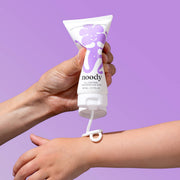
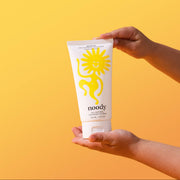
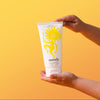
Mineral SPF 50 is the clear choice — and modern formulations have come a long way from the thick white paste of older mineral sunscreens. Our Sun Balm SPF 50 uses a sheer zinc oxide formula that blends without a heavy white cast, is free from synthetic fragrances, and is formulated to be gentle enough for babies 6 months and over.

- Broad-spectrum UVA/UVB protection
- Zinc oxide — sits on skin, not absorbed
- Free from synthetic fragrances — no sting, no reaction
- Water resistant — built for outdoor play
- Suitable from 6 months
- No oxybenzone, no octinoxate
How to apply sunscreen correctly
The right sunscreen applied poorly doesn't protect properly. Most people apply only 25–50% of the amount needed for the SPF on the label to be effective.
-
Apply 20 minutes before going outside
This allows the sunscreen to form a protective layer and adhere to skin before UV exposure begins. With mineral SPF this step is less critical (it works immediately), but it's still a good habit.
-
Use more than you think you need
For a toddler or young child, you need approximately a teaspoon per body part (face, each arm, each leg, torso front, torso back). It always feels like a lot — that's the right amount.
-
Don't miss the spots you always miss
Ears, back of neck, backs of hands, tops of feet, and the part where the hair meets the forehead. These are the most commonly missed areas and some of the most sun-damaged in adults.
-
Reapply every 2 hours
And immediately after swimming or heavy sweating, even if using water-resistant sunscreen. "Water resistant" doesn't mean waterproof — it means the SPF holds for a period of water exposure, not indefinitely.
-
Use other protection too
Sunscreen is one layer of protection — not the only one. A wide-brimmed hat (protecting ears, neck, and face), UV-protective clothing, shade, and timing (avoiding 10am–4pm peak UV) are all valuable. Sunscreen fills the gaps, not replace the others.
The UV Index explained
The UV Index measures the intensity of UV radiation at the Earth's surface. It's the most useful number for deciding what level of protection your child needs each day.
| UV Index | Level | What to do |
|---|---|---|
| 1-2 | Low | Enjoy outdoors. Minimal protection needed for most people. |
| 3-5 | Moderate | Seek shade during midday. Hat, sunscreen, and protective clothing recommended. |
| 6-7 | High | Reduce sun exposure 10am-4pm. SPF 50, hat, and protective clothing essential. |
| 8-10 | Very High | Take extra care. Avoid midday sun. Reapply sunscreen frequently. Keep young children in shade. |
| 11+ | Extreme | NZ summer regularly hits 11+. Stay indoors or in full shade during midday hours. Maximum protection for any time outdoors. |
"Sun protection isn't about avoiding the outdoors — it's about making the outdoors safe for the skin they've got."
MetService NZ: metservice.com — UV forecast in weather reports
NIWA UV Alert: niwa.co.nz/climate/uv
SunSmart NZ: sunsmart.org.nz — includes UV alerts by region
What parents say about Sun Balm SPF 50
"Finally a sunscreen that doesn't flare my daughter's eczema. We've tried so many that caused reactions — this is the only one we've found that works and doesn't set her off. And it actually stays on."
"We'd given up on sunscreen for our 2-year-old after multiple reactions. The Sun Balm is genuinely different — gentle enough for his sensitive skin, doesn't sting his eyes, and actually stays on at the beach. Finally."
Mineral SPF that won't trigger sensitive skin
Sun Balm SPF 50 is built for children with sensitive, reactive, or eczema-prone skin — broad-spectrum protection without the fragrances, chemicals, and common irritants that cause reactions.

Broad-spectrum UVA/UVB protection using zinc oxide — sits on the skin surface rather than absorbing through it. Free from synthetic fragrances, water-resistant, and gentle enough from 6 months. The sunscreen for skin that reacts to other sunscreens.
Pair it with your daily skincare routine:


Our Promise
If your little one’s skin reacts, stop use and contact us straight away. Safety concerns are handled separately from the 30-day guarantee. For satisfaction claims, the guarantee covers one product from your first Noody order.
When you're ready, we're here.
Individual results may vary. Noody products are designed to support and nourish the skin — not to treat or cure medical conditions. Always consult your child's healthcare provider for personalised medical advice.