




The Bedtime Routine That Actually Works
For babies and children with sensitive or eczema-prone skin, nights can be the hardest part. Here's what actually helps — and why.
Why skin and sleep are inseparably linked
Sleep problems and skin problems are often discussed separately. But for many babies and children, they're two sides of the same coin — itch disrupts sleep, poor sleep lowers the itch threshold, making the itch worse the next night. Breaking that cycle requires addressing both at once.
For parents, this can feel like the most demoralising part. You've heard "sleep when the baby sleeps" — but when your baby doesn't sleep, that advice falls flat. You're exhausted, your child is exhausted and uncomfortable, and it's hard to know what to try next.
60% of children with eczema experience sleep disturbance — including difficulty falling asleep, frequent waking, and fragmented sleep throughout the night. This isn't just uncomfortable for your child. Chronic sleep deprivation affects immune function, inflammatory response, and skin barrier repair — all of which can make skin conditions worse. Good sleep is genuinely part of good skin health.
What happens to skin during sleep
During deep sleep, the body releases growth hormone — which drives cell renewal, tissue repair, and skin barrier restoration. Transepidermal water loss (TEWL) is lowest during sleep, meaning the skin is most efficient at retaining moisture. The immune system downregulates inflammatory signals. In short: sleep is when skin heals.
But itching intensifies at night for several reasons — body temperature rises, distractions disappear, and cortisol (which suppresses itch) drops. The result: even skin that seems manageable during the day can become much more reactive at night.
Why nights are harder
Body temperature rises
Warmth intensifies itch. As body temperature rises in the evening, itch signals increase — especially in already-inflamed skin.
Cortisol drops
The body's natural anti-inflammatory hormone is lowest at night. Less cortisol means less natural suppression of itch and inflammation.
Nothing else to focus on
During the day, activities and stimulation distract from itch. In the dark and quiet, there's nothing to compete with — itch dominates.
"Sleep is when skin heals. A consistent bedtime routine isn't just about sleep — it's skin treatment done the right way."
Understanding these dynamics helps you work with them rather than against them. The goal of the bedtime routine isn't just to get your child to sleep — it's to reduce skin temperature, apply protective products at the moment skin needs them most, and create the sensory signals that tell your child's nervous system it's time to wind down.
The minute-by-minute bedtime routine
This routine is designed to cool, calm, and protect skin — while building the sensory cues that help your child associate bedtime with winding down.
-
60min before
Start winding down
Dim the lights, reduce screen time, lower the room temperature if possible. The goal is to start dropping core body temperature early — this signals the body to prepare for sleep and reduces the nighttime itch spike.
-
30min before
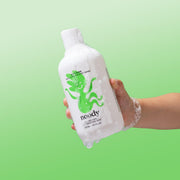
Warm (not hot) bath
5-10 minutes maximum. Lukewarm water rehydrates the skin and helps lower core body temperature. Use a gentle wash free from synthetic fragrances — not bubble bath products that strip the skin's oils.
Use: Soft Suds -
3min after bath
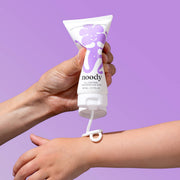
Moisturise immediately
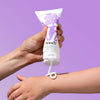
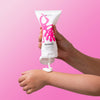
Pat dry (don't rub) and apply moisturiser within 3 minutes of bath. This is the most important moment for locking in hydration. Apply generously from head to toe — don't rush this step. The ritual of it also helps signal bedtime.
Use: Lotion Potion -
Thentargeted
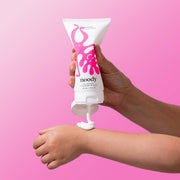
Treat problem areas
Apply a thicker balm to any dry patches, red spots, or reactive areas. A barrier balm at night is particularly effective — there are fewer environmental disturbances to reduce its contact time, so it can work longer.
Use: Calm Balm -
Laststep
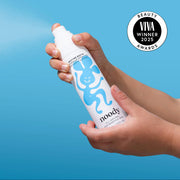
Magnesium spray
A simple magnesium spray on feet or legs can become a powerful sleep cue through the ritual alone — and many parents find it genuinely helps their little ones settle. Apply 2-3 sprays to feet, massage gently, let it dry.
See the magnesium section below for what the research actually says.
Use: Bedtime Bestie
The power of a bedtime routine isn't just chemical — it's neurological. When your child's brain learns to associate the bath, the lotion, the spray, and the lights going down with sleep, it begins producing melatonin in anticipation. The routine becomes a sleep trigger. Most families see meaningful improvement within 1-2 weeks of consistent practice.
What does magnesium actually do for sleep?
Honest answer: the research is still evolving
Oral magnesium has solid research behind it for supporting sleep in adults. Transdermal (skin) absorption — the type you'd get from a spray — is where the research gets more complicated. The evidence for transdermal magnesium absorption is still emerging, and we don't claim otherwise.
What we do know: many parents find magnesium spray as part of a bedtime routine helps their little ones relax and settle. Whether this is the mineral itself, the calming ritual of application, or the gentle massage involved — the outcome is what matters. The routine benefits are well-established. The touch, the scent, and the calm it creates are real.
Our Bedtime Bestie combines magnesium with a gentle, calming scent designed for bedtime. Whether through the mineral or the ritual — it's become a staple in thousands of NZ family bedtimes.
There's some preliminary research suggesting that children with eczema may have lower magnesium levels than children without — and that magnesium deficiency can worsen inflammation and itch. This is interesting but not yet conclusive. We share it not as a claim, but because parents deserve to know what the research is actually finding.
The sleep environment for sensitive skin
What helps
- Room temperature 18–20°C (cool reduces itch)
- Cotton or bamboo bedding — breathable, soft
- Humidifier in very dry climates or winter
- Light layers rather than heavy blankets (reduce overheating)
- Freshly washed bedding (fragrance-free detergent)
- White noise for babies — masks environmental disturbances
- Breathable cotton pyjamas with no tags or rough seams
What doesn't help
- Overheating — extra blankets, central heating too high
- Synthetic fabrics (polyester, nylon) against skin
- Fragranced laundry products on bedding
- Carpets and soft toys that accumulate dust mites
- Pets sleeping in the same room (dander trigger)
- Low humidity — drying air worsens skin overnight
- Tight-fitting clothing that restricts airflow
Dust mites thrive in warm, moist bedding — and are a major trigger for eczema and reactive skin. Wash bedding weekly in hot water (60°C+), use dust mite-proof mattress and pillow covers, and vacuum the mattress regularly. It sounds like a lot, but it can make a significant difference to nighttime symptoms.
Products designed for the night shift


"My 2 year old was waking between 12am and 3am ready to party. I started putting 2 sprays of Bedtime Bestie on each foot once she's in bed. I don't see her again until 6am. Magical. She sleeps, I sleep."
"This spray has become part of our bedtime routine for all 3 of my little ones. I've noticed how much more relaxed and easy it is for each of them to drift off, and they wake up visibly more well-rested and happy."
"Ever since the first night trying Bedtime Bestie, our twins have been sleeping so much better. We had multiple wakings (double because twins!) but now we have far fewer. This is a staple in our nighttime routine."
"My little one can now sleep better at night and has shown a dramatic improvement in eczema. Absolutely love Noody Calm Balm and Lotion Potion. Living with eczema has been truly life changing and we finally feel like we have the right tools."
Ready to start the bedtime routine that actually works?
The Bedtime Bundle has everything you need for the full routine — bath, moisturise, treat, and the sleep spray that's changed bedtime for thousands of NZ families.

Soft Suds (gentle bath wash) + Lotion Potion (post-bath moisturiser) + Bedtime Bestie (magnesium sleep spray). The complete bedtime routine — skin care and sleep support in one bundle.
Or start with Bedtime Bestie:
Our Promise
On your first Noody order, choose one product to try for 30 days. If it isn’t right for your little one, we’ll refund that product in full — no return required for the opened claimed product.
When you're ready, we're here.
Individual results may vary. Noody products are designed to support and nourish the skin — not to treat or cure medical conditions. Always consult your child's healthcare provider for personalised medical advice.
