

The truth about what goes on their skin
How to read labels, spot the nasties, and build a genuinely clean routine for your little one.
Why Ingredients Matter More for Children
We put a lot of care into what our children eat. Most of us read food labels. But skincare? Many parents assume that anything sold in a baby product is safe — and the packaging (soft colours, cute fonts, words like "gentle" and "natural") reinforces that assumption.
The reality is that skincare regulation for children's products is minimal in most countries, including New Zealand. "Baby" on the label is a marketing term, not a safety standard. Here's why the ingredients in your child's skincare deserve the same attention as the ingredients in their food.
Children's skin absorbs more
Children have a higher ratio of skin surface to body mass than adults, and their skin barrier is thinner and more permeable. Ingredients penetrate more readily and are distributed through a smaller body — meaning exposure per kilogram is significantly higher.
Developing systems are more vulnerable
The hormonal, neurological, and immune systems are still developing in young children. Some ingredients — particularly endocrine disruptors like parabens and phthalates — can interfere with these systems during critical developmental windows.
Cumulative exposure over time
A product used twice daily from birth until age 5 represents over 3,600 applications. Even small amounts of problematic ingredients add up significantly over time. The cumulative burden matters, not just the dose in a single application.
"Natural" doesn't always mean safe
Poison ivy is natural. So is arsenic. "Natural" is a marketing word, not a safety guarantee. Essential oils — lavender, tea tree, citrus — are common skin irritants. The question is whether each ingredient is appropriate for your child's skin, not whether it comes from a plant.
When the long-term safety of an ingredient is uncertain — especially for children — the precautionary approach is to avoid it. There are plenty of effective, well-researched ingredients that don't carry uncertainty. Why accept unknown risk when you don't have to?
The Nasties List
These are the ingredients we look for first when reading a label. They appear in many mainstream baby and children's products — sometimes disguised under unfamiliar names. Know what to look for.
-
✗Also known as: SLS, SLES, sodium coco-sulfate
Sulfates
Sulfates are the foaming agents in most mainstream cleansers and shampoos. They're highly effective at removing oil and dirt — but they're too effective. They strip the skin's natural lipid barrier, leaving skin dry and more permeable. For children with eczema or sensitive skin, sulfates are a primary trigger. There is no reason to use them in children's products.
-
✗Also known as: methylparaben, propylparaben, butylparaben, ethylparaben
Parabens
Parabens are preservatives used widely in cosmetics and personal care products. They're effective and inexpensive — which is why they're so common. The concern is that parabens are endocrine disruptors: they mimic oestrogen in the body. Given that children's hormonal systems are still developing, exposure during early years is particularly concerning. The EU has already banned several parabens in children's products.
-
✗Also known as: "fragrance", "parfum", "aroma"
Synthetic fragrances
The word "fragrance" on a label can represent a blend of up to 3,000 individual chemicals — many of which don't need to be disclosed because they're considered "trade secrets." Synthetic fragrances are the number one cause of contact dermatitis in children's skincare. Absolutely no reason for them in any product intended for sensitive or young skin. Even "unscented" products sometimes contain masking fragrances — look for "fragrance-free."
-
✗Also known as: hidden in "fragrance", DEP, DBP, DEHP
Phthalates
Phthalates are plasticisers used to make fragrance last longer on skin. Because they're bundled into the "fragrance" ingredient, they rarely appear on labels. Like parabens, they're endocrine disruptors. The easiest way to avoid them is to avoid products with "fragrance" or "parfum" in the ingredient list entirely.
-
✗Also known as: DMDM hydantoin, imidazolidinyl urea, diazolidinyl urea, quaternium-15
Formaldehyde releasers
These preservatives work by slowly releasing formaldehyde — a known carcinogen — to prevent microbial growth. They're effective but unnecessary when safer preservative alternatives exist. They're common skin sensitisers, particularly for children. Look for those long chemical names in the ingredient list.
-
✗Also known as: PEG-4, PEG-100 stearate, polyethylene glycol
PEGs (polyethylene glycols)
PEGs are used as emulsifiers and thickeners. The concern isn't the PEG compounds themselves — it's that the manufacturing process can contaminate them with 1,4-dioxane, a probable carcinogen. PEGs also enhance skin penetration, meaning they can help other ingredients (including problematic ones) absorb more deeply.
-
✗Also known as: paraffinum liquidum, petrolatum, mineral oil
Mineral oil & petroleum derivatives
These petrochemical derivatives create an occlusive barrier on skin that traps moisture in. They're not harmful per se — but they don't nourish or support the skin barrier in any meaningful way. They also block the absorption of beneficial ingredients and can trap irritants against the skin. Better barrier options exist.
When evaluating a new product, check the first three ingredients (they make up the majority of the formula) and the last three (where preservatives and fragrance often hide). If you see any of the above nasties in those six spots, put it back.
The Good Stuff
The good news is that there are genuinely effective, well-researched ingredients that are kind to children's skin. These are the ones we actively look for — and the ones that form the basis of every Noody formula.
-
🌾Clinically proven
Colloidal oatmeal
One of the most studied and proven skincare ingredients for eczema and sensitive skin. Colloidal oatmeal contains beta-glucans that soothe inflammation, avenanthramides that reduce itch, and lipids that support the skin barrier. FDA-approved as a skin protectant. Safe from birth, effective for all ages.
-
🌼Anti-inflammatory
Calendula
Calendula (pot marigold) extract has well-documented anti-inflammatory and wound-healing properties. It's rich in flavonoids and triterpenoids that calm irritated skin, reduce redness, and support barrier repair. Gentle enough for newborns, effective for all skin types.
-
🦠Microbiome support
Prebiotics
The skin microbiome — the community of beneficial bacteria that live on the skin's surface — plays a crucial role in immune function and barrier integrity. Prebiotics feed these beneficial bacteria, helping maintain a healthy, balanced microbiome. Children with eczema and sensitive skin often have disrupted microbiomes; prebiotics support restoration over time.
-
🍯Antibacterial + healing
Mānuka honey
New Zealand mānuka honey is unique for its high concentration of methylglyoxal (MGO) — a naturally occurring antibacterial compound. Clinically studied for wound healing and infection prevention, it's also deeply moisturising and anti-inflammatory. One of the ingredients we're most proud to source locally.
-
🧈Deep moisture
Shea butter
Rich in fatty acids (oleic, stearic, linoleic) and vitamin E, shea butter is one of the most effective plant-based moisturisers for dry and sensitive skin. It absorbs without leaving a heavy residue, supports the skin's natural barrier lipids, and has mild anti-inflammatory properties. Suitable from birth.
-
🛡️Barrier protection
Zinc oxide
Zinc oxide provides physical barrier protection — from UV (as a mineral sunscreen), and from friction and moisture in nappy areas. It also has mild antibacterial and anti-inflammatory properties. Safe for all ages, well-tolerated by sensitive skin. A foundational ingredient in rash prevention and sun protection.
-
🥥Use with awareness
Coconut oil
Coconut oil is antimicrobial and moisturising — and many parents swear by it. However, it's worth knowing that it's high in lauric acid, which can disrupt the skin microbiome in some children and trigger reactions in eczema-prone skin. It works brilliantly for some, less so for others. Patch test first, and don't assume it's universally safe because it's "natural."
How to Read an Ingredient Label
Ingredient labels follow an international standard (INCI — International Nomenclature of Cosmetic Ingredients) that, once you understand the rules, tells you a lot about what's actually in a product and how much of it is there.
Ingredients are listed by concentration — highest first
The first ingredient is present in the highest amount; the last is present in the smallest amount. Water (aqua) is typically first. The first five ingredients usually make up 80–90% of the formula. If a key active ingredient you're hoping for (colloidal oatmeal, calendula) is near the bottom, there's very little of it in the product.
Latin names are not a red flag — they're standard
INCI uses scientific names for plant-derived ingredients. "Avena sativa" is oats (colloidal oatmeal). "Butyrospermum parkii" is shea butter. "Calendula officinalis" is calendula. The scientific name doesn't indicate anything sinister — you can look up any ingredient on the Environmental Working Group's Skin Deep database (ewg.org) to understand what it is and its safety profile.
"Dermatologist tested" means almost nothing
"Tested" doesn't mean approved, recommended, or safe. It means a dermatologist looked at the product at some point. There is no standard for what "dermatologist tested" means, how many dermatologists were involved, or what the test consisted of. It's a marketing claim, not a safety certification.
Certifications that do mean something
Look for certifications with actual standards behind them — not all certifications are equal.
COSMOS / ECOCERT Organic
Rigorous EU standard. Minimum 95% natural origin, certified organic ingredients, no controversial chemicals. Audited annually.
Leaping Bunny / PETA
Cruelty-free certification. No animal testing at any stage of production. Independently verified.
"Natural" / "Organic" (unverified)
No standard. Anyone can print this. Without a certifying body named, these words mean nothing. Read the actual ingredient list instead.
EWG Skin Deep (ewg.org/skindeep) — database of 90,000+ products and ingredients with hazard ratings. Think Dirty app — scan barcodes to get ingredient ratings instantly. INCI Decoder (incidecoder.com) — detailed explanations of individual ingredients. Bookmark these for your next supermarket or pharmacy trip.
The Noody Difference
Noody was founded because we couldn't find products we genuinely trusted for our own children's eczema-prone skin. Everything we make is formulated from that starting point: what would we put on our own kids?
Founded by parents, for parents
Ashleigh and Scott created Noody while managing their children's eczema. Every formula decision comes from lived experience, not just lab results. We understand what it's like to read ingredient lists at midnight.
Made in New Zealand
All Noody products are formulated and manufactured in New Zealand, to New Zealand standards. We know exactly what's in our products because we designed them here.
Every ingredient earns its place
We don't add ingredients for texture, smell, or shelf appeal. Every ingredient in a Noody formula is there for a specific reason — and we can explain what that reason is. Our formulations are deliberately simple.
Prebiotic microbiome focus
Our core formulas are built around prebiotic technology — supporting the skin's own ecosystem rather than just treating symptoms. We believe the microbiome is the future of sensitive skin care, and we're building towards it.
What we never use
Building a Natural Routine
Transitioning to a cleaner routine doesn't have to mean replacing everything at once. In fact, that's the worst approach — because if a reaction occurs, you won't know which new product caused it. Here's a sustainable approach to building a genuinely clean routine.
Simplify first
Fewer products means fewer potential triggers. Most children with sensitive skin need three things: a gentle cleanser, a fragrance-free moisturiser, and a targeted balm for flares. Everything else is optional. Audit your current routine and eliminate anything you don't genuinely need.
Patch test new products
Before using a new product all over, apply a small amount to a patch of skin on the inner arm or behind the knee. Wait 24–48 hours. Look for redness, bumps, or itching. If the skin stays calm, the product is likely fine. This is especially important when introducing new products to eczema-prone or reactive skin.
One change at a time
Replace products one at a time, waiting 2 weeks between changes. This is the only way to know whether a product is helping, doing nothing, or causing harm. If you change three products at once and your child's skin improves — or flares — you'll have no idea why.
Trust your instincts
You know your child's skin better than any ingredient database does. If something doesn't feel right, stop using it — even if the product has glowing reviews or clean-sounding ingredients. Every child's skin is different, and your observations are the most valuable data you have.
Morning: moisturise (all over, even if skin looks fine). Bath time: gentle soap-free cleanser. Post-bath: moisturise within 3 minutes. Flare ups: targeted balm on affected areas. That's it. A clean, consistent four-step routine beats a complicated ten-step one every time.
The Complete Noody Range
Every Noody product is formulated without the nasties listed above, and with the good stuff front and centre. Clean ingredients, clear labels, honest claims — that's it.
Complete Bundle
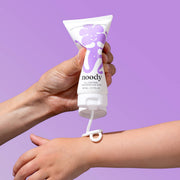
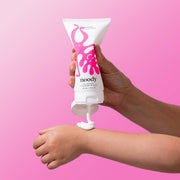
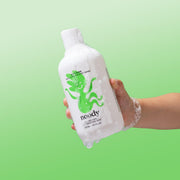
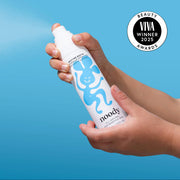
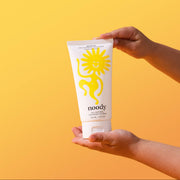
The full Noody routine in one box — every product we make, designed to work together. Soft Suds for cleansing, Lotion Potion for daily moisture, Calm Balm for flares, Sun Balm SPF 50 for sun protection, and Bedtime Bestie for sleep support. Everything formulated without fragrance, sulfates, parabens, or any of the nasties above. The complete natural routine, simplified.
Shop the Complete BundleOr build your routine piece by piece:
Label Reading Cheat Sheet
Screenshot this before your next shopping trip.
🚫 Avoid these
- Sodium lauryl sulfate (SLS)
- Sodium laureth sulfate (SLES)
- Methylparaben / propylparaben
- Fragrance / parfum / aroma
- Phthalates (in "fragrance")
- DMDM hydantoin
- Imidazolidinyl urea
- PEG compounds
- Paraffinum liquidum
- Petrolatum
✅ Love these
- Avena sativa (colloidal oatmeal)
- Calendula officinalis
- Prebiotics / inulin
- Leptospermum scoparium (mānuka)
- Butyrospermum parkii (shea)
- Zinc oxide
- Glycerin (humectant)
- Ceramides
- Panthenol (vitamin B5)
- Tocopherol (vitamin E)
🔍 Label Checks
- Read first 5 ingredients carefully
- Check last 3 for preservatives
- Search "fragrance" — if there, skip
- Look for certified organics
- Use EWG Skin Deep to verify
🧪 New Product Protocol
- Patch test inner arm first
- Wait 48 hours before using fully
- Introduce one product at a time
- Wait 2 weeks to assess
- Note any reactions immediately
🌿 The Clean Routine
- Gentle cleanser (fragrance-free)
- Daily prebiotic moisturiser
- Targeted balm for flares
- Mineral SPF 50 for sun
- That's it — keep it simple
Get the no-nasties newsletter
Ingredient deep-dives, new product news, and practical advice for parents who care what goes on their child's skin.
No spam. Unsubscribe any time.
Important note: This guide is intended to help parents make more informed decisions about skincare ingredients. It is not a substitute for medical advice. Ingredient safety assessments are based on current research and may evolve. Always consult your child's healthcare provider for personalised guidance, particularly if your child has a diagnosed skin condition or known allergies.