


If you’ve ever stood over a half-dressed toddler thinking, “Do I really need to moisturise every night?” - you’re very much our people.
The short answer is yes. For babies and toddlers, moisturising isn’t an optional extra. It’s much closer to brushing teeth than it is to a “nice-to-have.” One small, consistent habit can make a big difference to how their skin grows, strengthens, and copes with everyday life.
Why little skin needs more help than ours
From birth through the toddler years, your child’s skin is still very much under construction.
Their skin barrier is thinner than an adult’s, which means moisture escapes more easily and everyday irritants — things like saliva, soap residue, dust, and detergents — can get in more easily too. On top of that, their skin is still developing its natural “acid mantle.” In the early months, skin shifts from an almost neutral pH to a slightly acidic one. That gentle acidity helps support healthy bacteria, allows barrier-building enzymes to work properly, and makes it harder for the wrong microbes to take over.
Because the barrier is still maturing, children’s skin also loses water much faster than adult skin, especially after bathing or when the air is dry.
In plain terms: little skin needs more backup. Moisturiser is one of the simplest tools you have to support that process.
So how often should you moisturise?
The old advice used to be “only when the skin looks dry.” Newer thinking leans more towards “once a day as a baseline, and more often when life is rough on their skin.”
For most babies and toddlers with healthy skin, one full-body moisturise a day is a great foundation. The best time is after a bath, or after an evening wipe-down if bath time doesn’t happen every night. This helps seal in moisture and keeps the barrier happy.
If you notice mild dryness — rough patches, slightly flaky areas, or skin that doesn’t feel as soft as usual — it’s worth stepping up to twice daily. That might look like a full moisturise after bath time, plus a quick top-up on the usual trouble spots such as shins, wrists, cheeks, or behind the knees.
For very dry or eczema-prone skin, always follow your doctor or specialist’s advice. In most cases, medicated creams are applied first to active flare areas, with moisturiser layered on afterwards or used everywhere else as support. Moisturiser alone won’t treat eczema, but it plays an important role in protecting the skin barrier between flares.
How to tell if their skin needs more (or less)
You don’t need a microscope — your hands and eyes will tell you plenty.
Skin that needs more moisture often feels rough or slightly sandpapery instead of soft. You might notice flaking or dry specks on cheeks, arms, or legs, or a greyish “ashy” look on deeper skin tones. Redness in creases like the neck, wrists, ankles, or behind the knees is another common clue, as is increased scratching, rubbing on bedding, or complaints that skin feels “scratchy” or sore.
On the flip side, if you’re using very heavy ointments in hot or humid weather and notice tiny clear or red bumps, or skin that looks sweaty and bumpy rather than dry, that can be a sign of heat rash. In those situations, it helps to cool things down, switch to a lighter moisturiser on large areas, and save thicker balms for genuinely dry patches only.
A simple moisturising routine by age
In the newborn stage (0–3 months), less is more. The goal is to protect the brand-new skin barrier without overwhelming it. Short, lukewarm baths a few times a week are plenty. After bathing, apply a gentle, baby-safe moisturiser to dry or peeling areas, and use a barrier cream at every nappy change to protect against moisture and acidity.
Between 3 and 12 months, moisturising becomes more of a daily habit. A once-daily full-body moisturise after bath time or an evening wash helps maintain hydration. This is also the drool era, so paying extra attention to the chin, neck, and chest can help prevent irritation. From six months onward, a gentle mineral sunscreen is important for outdoor time during sunnier months.
The toddler years (1–3 years) are wriggly, busy, and often hard on skin. At this stage, a once-daily full-body moisturise is non-negotiable. In winter or very dry climates, it’s normal to need extra top-ups on shins, hands, cheeks, and behind the knees. Before heading out into cold or wind, a thicker cream or balm on cheeks and lips can help protect exposed skin. Letting toddlers help rub it in can be messy, but giving them a “job” often means fewer battles.
Making the habit stick (for tired parents)
The hardest part usually isn’t the product — it’s remembering.
Habit stacking helps. Try attaching moisturising to something you already do every day: moisturise after patting them dry and before the nappy goes on, after pyjamas as a quick leg-and-arm rub, or after the morning nappy as a check-in on shins and cheeks. Same order, same time, less thinking.
Where Lotion Potion fits in
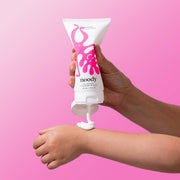
Within all of this, our Lotion Potion is designed to be your daily support act, not a miracle cure.
It works beautifully as a once-a-day, all-over moisturiser after bath time, a quick top-up on familiar dry spots, or a light base layer under thicker balms in cold or windy weather. If your child uses prescribed eczema treatments, those should always go on flare areas first as directed by your doctor, with Lotion Potion supporting the rest of the skin.
The takeaway
Little skin is thinner and loses water faster than adult skin, which means it needs more consistent care. Once-daily moisturising is a great baseline, with extra applications when skin is dry, irritated, or exposed to harsh weather. Texture changes, flaking, redness, and itchiness are your best signals to adjust your routine. And above all, a simple, age-appropriate habit done consistently beats complicated, on-again-off-again care every time.
One small daily habit. Comfier skin. And a little less late-night Googling.