

Daily Skincare Routine for Sensitive Little Ones
What's actually going on with your baby's skin — and how to build a routine that works, without the overwhelm.
*Based on parent-reported surveys
Your baby's skin is genuinely different
Not just a little different — fundamentally, structurally different from yours.
Baby skin is thinner, with a developing barrier function that doesn't fully mature until around 2–3 years. It's also more pH-sensitive: newborn skin starts alkaline (around pH 7) and takes months to reach the slightly acidic pH 5–5.5 that adult skin maintains naturally. That acidic mantle is your skin's first line of defence — until it's established, babies are more vulnerable to irritants, moisture loss, and bacterial imbalance.
"Sensitive skin" isn't a diagnosis — it's a description. It means skin that reacts more easily than typical to common triggers: friction, heat, certain ingredients, or environmental changes. It can look like redness, dryness, flaking, or blotchiness. It's extremely common in the first year of life.
The microbiome factor
Your baby's skin is home to billions of microorganisms — bacteria, fungi, viruses — that collectively form the skin microbiome. Far from being a problem, these microbes play a critical role in regulating inflammation, training the immune system, and maintaining barrier function.
The skin microbiome continues developing throughout childhood, only reaching adult-like composition around puberty. Until then, the delicate microbial ecosystem can be disrupted by over-washing, harsh surfactants, and fragranced products — making the right product choices genuinely important.
Genetics plays a big role — if one parent had eczema, hay fever, or asthma as a child, there's a 25–30% chance your baby will have sensitive skin. If both parents have these conditions, that risk rises to 50–70%. But environment matters too: the products you use, water temperature, clothing fabrics, and even the season can all influence how reactive skin behaves.
About that "80% of reactions" statistic
You may have seen claims that "80% of skin reactions are product-related." The accurate picture is more nuanced: irritant contact dermatitis accounts for approximately 80% of contact dermatitis cases, with common triggers including products, bodily fluids (saliva, urine), and environmental factors like cold air and water. Products are often implicated — but they're not the only culprit, and the same product can affect different children differently.
Common triggers and how to spot them
When your baby's skin reacts, it can be hard to know what caused it. Reactions are often cumulative — several small triggers adding up to a visible flare — rather than one obvious culprit.
| Trigger Category | Common Examples | What to Try |
|---|---|---|
| Product ingredients | Synthetic fragrances, preservatives, SLS | Switch to formulas free from synthetic fragrances, with minimal ingredients |
| Physical irritants | Rough fabrics, elastic waistbands, tags, drool | 100% cotton or bamboo, remove tags, barrier cream around mouth |
| Temperature changes | Overheating in bath, cold air in winter, heaters | Lukewarm bath water, dress in layers, use a humidifier |
| Overwashing | Daily soap use, long baths, too much product | Limit wash to 5-10 mins, use gentle cleansers only 2-3x/week |
| Environmental | Dust mites, pet dander, pollen, mould | Regular vacuuming, wash bedding frequently, monitor humidity |
"Reactions are often cumulative — several small triggers adding up at once — rather than one obvious culprit."
The product ingredient problem
Not all "natural" or "baby" products are skin-friendly. Many mainstream baby washes contain sodium lauryl sulfate (SLS), which strips the skin's natural oils, or fragrances — even "natural" fragrances — which are among the most common causes of contact sensitisation in babies.
Ingredients that support sensitive skin
- Colloidal oatmeal — soothes and protects
- Calendula extract — gentle anti-inflammatory
- Prebiotics — support microbiome balance
- Glycerin — humectant, draws moisture in
- Ceramides — reinforce skin barrier
- Zinc oxide — calms redness, mild protection
Ingredients to avoid
- Synthetic fragrances (listed as "parfum" or "fragrance")
- Sodium lauryl sulfate (SLS/SLES)
- Formaldehyde-releasing preservatives
- Alcohol (denat.) — drying
- Lanolin (if family has wool sensitivity)
Ingredients that actually help
Once you've reduced triggers, you can actively support skin repair. These are the most well-researched ingredients for sensitive, reactive skin in babies and children:
Colloidal Oatmeal
Clinically proven to soothe itch, reduce inflammation, and form a protective barrier. One of the safest, most researched ingredients in paediatric skincare.
Calendula
Traditional botanical with documented anti-inflammatory and wound-healing properties. Gentle enough for newborn skin.
Prebiotics
Feed the beneficial bacteria on your baby's skin, supporting a balanced microbiome — which helps regulate inflammation naturally.
Manuka Honey
NZ's gift to skincare. Has natural antibacterial and humectant properties, making it useful for irritated, dry patches.
Glycerin
A humectant that draws moisture from the environment into the skin. Essential in any moisturiser for dry, sensitive skin.
Ceramides
Natural lipids that form the "mortar" of the skin barrier. Depleted in eczema-prone and sensitive skin — replenishing them helps lock moisture in.
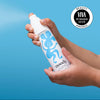
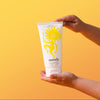
Ingredients like colloidal oatmeal and prebiotic complexes (found in our Lotion Potion) and gentle botanical cleansers like oat and chamomile (in Soft Suds) are specifically chosen because they work with sensitive skin rather than against it. Free from synthetic fragrances. No harsh surfactants. Just the ingredients your little one's skin actually needs.
The sensitive skin daily routine
Consistency matters more than complexity. Here's what actually works:
Warm, not hot
Keep baths to 5-10 minutes max. Lukewarm water (around 37°C — test with your elbow). Too hot strips the skin's natural oils.
Use a gentle wash free from synthetic fragrances — a small amount is enough. Avoid bubble bath products that lather heavily.
Moisturise immediately
This is the most important step. While skin is still slightly damp (within 3 minutes of bath), apply moisturiser to lock in hydration before the skin barrier can release it.
Pat (don't rub) dry first, then apply generously — especially to any dry patches, elbows, knees, and face.
Treat problem areas
Any particularly dry patches, red spots, or irritated areas benefit from a more targeted treatment — a thicker balm that stays in place and provides more intensive moisture and barrier support.
Daily moisturising
Sensitive skin needs moisturiser morning and night — not just after baths. A light layer in the morning helps maintain the barrier through the day's friction, clothing, and temperature changes.
A good routine should show improvement within 2-3 weeks. If your child's skin isn't responding, is weeping, crusting, or causing significant discomfort, see your GP or paediatric dermatologist. Sensitive skin can overlap with eczema, contact dermatitis, or other conditions that benefit from professional assessment.
Products designed for sensitive little ones
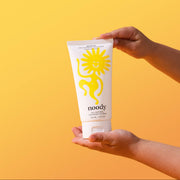
Every Noody product is formulated without fragrances, SLS, parabens, or harsh preservatives. Just the ingredients that help — nothing that doesn't.


What other parents have found
"My 2yr old has suffered with eczema for a while now. We tried so many different creams — nothing worked. We got Noody not even 3 weeks ago. After 2 days we started noticing results, within a week her skin was dramatically better. I wish we'd found it sooner."
"Having suffered from sensitive skin myself, I know how much hope and money you can waste trying different products. When my 3-month-old developed eczema I was sceptical — but Noody genuinely surprised me. His skin is completely different now."
"Never in my wildest dreams did I think this would work. I had tried everything before with very little results. After 2 days I saw instant results — the eczema was no longer raised, red or weeping. Completely blown away."
"I was the definition of a cynic and never in a million years thought this would work. My daughter had eczema on her cheeks since 6 weeks and nothing cleared it, not even steroid cream. Noody changed everything. Now I tell every parent I meet."
Ready to start the sensitive skin routine?
We know how overwhelming it can be to find products that actually work for sensitive little ones. That's why we created the Skin Support Bundle — everything you need, nothing you don't.

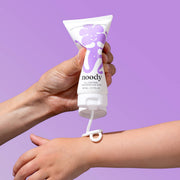
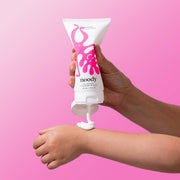
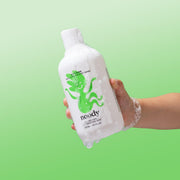
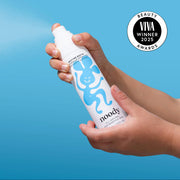
The complete sensitive skin routine in one bundle. Soft Suds (gentle botanical wash) + Lotion Potion (daily moisturiser) + Calm Balm (targeted relief). Each product is free from synthetic fragrances, SLS-free, and formulated specifically for babies and children.
Or start with just one:
Our Promise to You
On your first Noody order, choose one product to try for 30 days. If it isn’t right for your little one, we’ll refund that product in full — no return required for the opened claimed product.
When you're ready, we're here.
Individual results may vary. Noody products are designed to support and nourish the skin — not to treat or cure medical conditions. Always consult your child's healthcare provider for personalised medical advice.